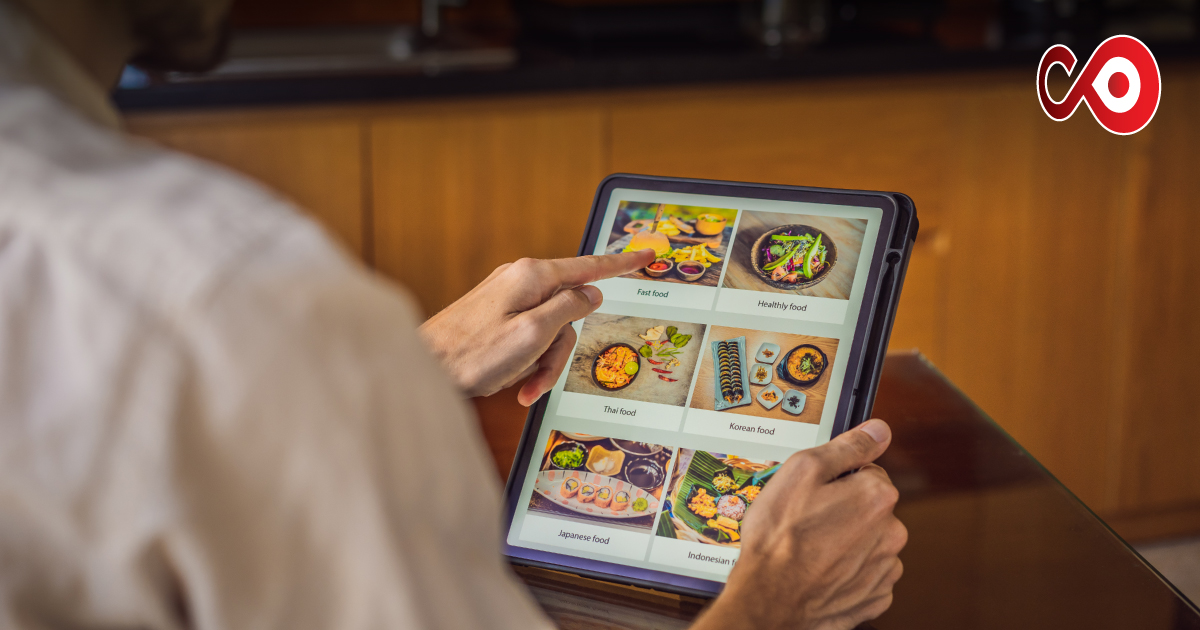
The UK food delivery market reached £14.3 billion in 2025 (Lumina Intelligence), with projected growth of 3.1% through the year. With so much consumer spend now happening online, having a strong digital presence is no longer optional for takeaways – it is the foundation of growth. Platforms like ChefOnline offer a commission-free way to enhance your online presence, take direct orders and keep full control of your customer relationships.
Digital marketing is essential for modern takeaway businesses because customer behaviour has shifted almost entirely online. Most diners now discover, compare and order from takeaways through a smartphone – searching on Google Maps, browsing Instagram, reading reviews and tapping through to a website. A takeaway that is not visible in those channels is invisible to the customers who are ready to order right now.
This guide explains how to promote your takeaway business online in a way that builds local visibility, increases direct orders and strengthens your independent brand. Each strategy is researched, cost-aware and built around keeping more of every sale in your own till.
Build a Professional Online Presence
Your website is the digital shopfront. Even when customers find you through Google Maps or Instagram first, the page they land on must load quickly and make ordering effortless. A weak online presence undermines every other marketing channel.
Create a Fast, Mobile-Friendly Website
Google’s Core Web Vitals confirm that page speed is a ranking factor. For takeaways the stakes are higher – slow pages cost direct orders. A takeaway website should focus on four things:
- Easy navigation with popular items visible first
- A clean, readable menu page with prices, descriptions and allergens
- Click-to-call functionality for mobile users
- Integrated online ordering that does not push customers to a marketplace checkout
If your menu page is thin, invest in proper restaurant menu page SEO so each dish can rank for long-tail local searches such as “chicken tikka masala near me”.
Optimise Your Website for Local SEO
Whitespark’s 2026 Local Search Ranking Factors report places on-page signals at roughly 33–36% of local ranking influence, followed by link signals at 24–26%. The foundations every takeaway should cover:
- Location pages for each delivery area, using real postcodes and landmarks
- Local keywords in titles, headings and meta descriptions
- Schema markup – Restaurant, Menu and LocalBusiness
- Internal linking between menu, blog and contact pages
For a full breakdown, see our guides to local SEO for restaurants and keyword research for restaurants.
Make Online Ordering Simple
Every additional checkout step reduces conversion. Offer guest checkout, support Apple Pay and Google Pay, save previous orders for one-tap reorder, and confirm by SMS. A customer who has chosen a meal should complete the order in under two minutes.
Optimise Your Google Business Profile
Your Google Business Profile sits at the centre of every successful takeaway marketing stack.
BrightLocal’s 2026 speed study found that 75% of consumers take less than 30 minutes to decide which local business to use. Your Google Business Profile (GBP) is what they see first – in the local pack, on Maps and in voice searches. Our guide to Google Business Profile optimisation for restaurants covers setup in depth.
Complete Every Section
An incomplete profile sends the wrong signal to both Google and customers. Fill in every field:
- Keyword-aware business description (under 750 characters)
- Accurate opening hours, including holidays
- Delivery areas with postcodes, not just a generic radius
- Attributes – halal, vegetarian options, wheelchair access
Upload Real Food Photography
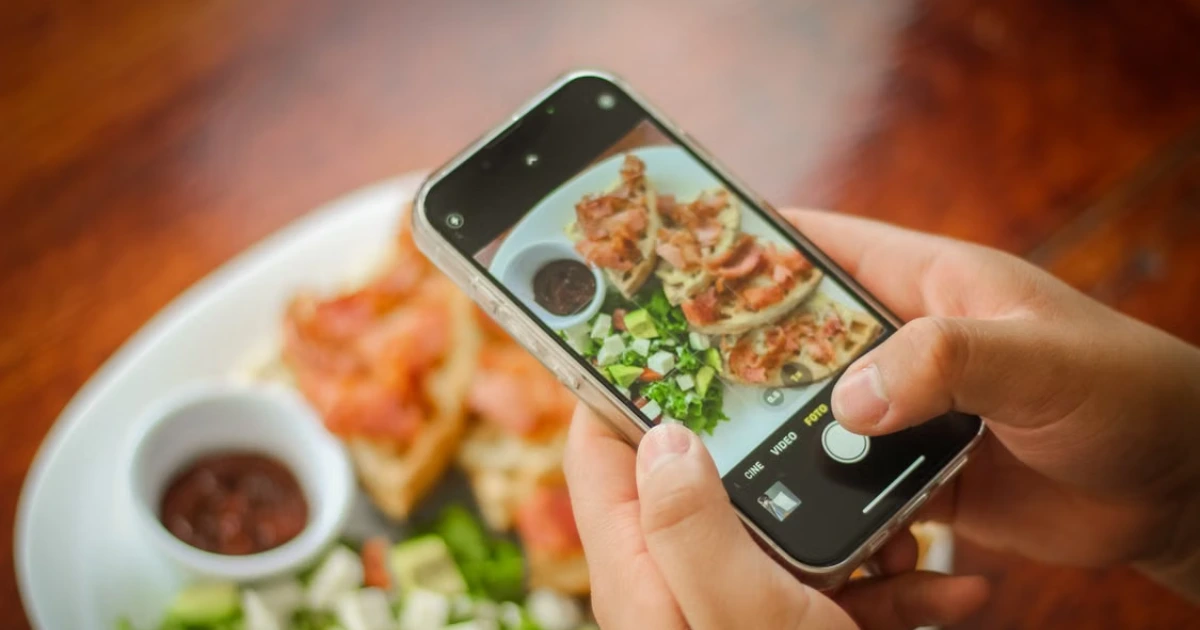
Listings with genuine, well-lit food photography receive more clicks, calls and direction requests. Upload fresh images every few weeks: signature dishes, the shopfront, staff and seasonal specials. Avoid stock photography – customers spot it instantly and it undermines authenticity.
Collect and Respond to Reviews
Reviews influence both rankings and conversions. BrightLocal reports Google remains the dominant review platform, used by around 81% of consumers when reading reviews. Build a steady pipeline by asking at the counter, adding review links to receipts, and following up by SMS. Respond to every review – positive and negative – within 24 hours.
Use Social Media to Attract More Customers
Consistent social media turns your takeaway into a recognisable local brand. Our social media marketing guide for restaurants and takeaways covers platform tactics in detail.
Choose the Right Platforms
- Facebook – strongest for customers over 30 and local community groups
- Instagram – visual discovery for food; good photography translates directly into orders
- TikTok – high reach among under-25s if you can post short behind-the-scenes clips
Content That Generates Orders
Mix content types: behind-the-scenes preparation videos, new menu launches, customer favourites, limited-time offers and user-generated content. Aim for one to two posts per platform per week. Quality and consistency outperform volume.
Run Local Paid Advertising
Geo-targeted Meta ads from £5 a day put your takeaway in front of customers within a 3–5 mile radius. Lead with an offer (“20% off your first direct order”) and retarget visitors who abandoned checkout. Measure cost per order before scaling. For a broader playbook on growing order volume, see our guide on how to increase sales in a failing takeaway business.
Increase Direct Online Orders
This is the central goal. Every direct order improves margin, gives you the customer data and builds a relationship delivery apps cannot.
Increase Direct Orders Through Your Own Channel
Every direct order through your own website improves margin, gives you the customer data and builds a relationship that no third-party platform can interrupt. A direct order typically costs around 1.5% in card-processing fees – a fraction of what marketplace listings charge – and the wider benefits include ownership of customer data, full control of the ordering experience, and a direct marketing channel that cannot be switched off. ChefOnline provides a commission-free online ordering platform that lets you take direct orders, manage your menu and build your brand without surrendering a share of every sale.
Offer Exclusive Website Deals
Give customers a reason to switch: “DIRECT10” for 10% off the first order, lower free-delivery thresholds than the marketplaces, exclusive meal bundles, and loyalty rewards tied to your direct channel.
Promote Online Ordering Everywhere
- Website – prominent “Order Online” button on the homepage
- Social media – regular posts with the direct link
- Printed menus and packaging – QR codes linking to your ordering page
- Email signature and GBP
Improve Local Search Visibility
When someone searches “Chinese takeaway near me”, Google shows the three businesses it considers most relevant, close and trusted. Being in that local pack is worth more than almost any other digital position.
Target Local Keywords
Three groups matter: town and neighbourhood searches (“Indian takeaway Edgbaston”), “near me” queries, and cuisine-specific searches (“halal burgers London”). Use them naturally in titles, headings, menus and your GBP.
Build Local Citations
Consistent NAP (name, address, phone) across trusted directories signals to Google that your business is real. Focus on Yell, Thomson Local, Scoot, Tripadvisor, your local Chamber of Commerce and community websites. Keep the format identical on every listing.
Earn Local Backlinks
Link signals rank as the second-strongest local ranking factor. Aim for links from local food blogs, community event websites, newspaper coverage and charities you support. One link from your local newspaper outweighs dozens of generic directory links. Our guide to local SEO for restaurants covers link building in more depth.
Encourage Repeat Customers
Acquiring a new customer costs roughly five times more than keeping an existing one. For takeaways, where the same customer may order weekly for years, lifetime value is substantial.
Launch a Loyalty Programme
Digital stamp cards (“buy nine, get the tenth free”), points rewards and birthday offers all lift order frequency. Make the programme visible on the website header, packaging and receipts.
Email and SMS Marketing
Email remains the most cost-effective retention channel. Send weekly promotions tied to slow nights, new menu announcements and seasonal campaigns. SMS works for time-sensitive offers – but use sparingly. UK SMS marketing is governed by PECR, so always obtain explicit consent and include an opt-out.
Partner with Your Local Community
Local partnerships build trust that paid advertising cannot match. They also generate the backlinks and social mentions that strengthen local SEO.
Work with Local Influencers
Micro-influencers (2,000–10,000 followers) often outperform big names because their audiences are local and engaged. Offer a free meal for an honest review and repurpose the content across your own channels.
Sponsor and Collaborate
Sponsor school fairs and amateur sports clubs. Cross-promote with nearby businesses – a coffee shop, an office park, a local gym. Joint competitions and bundle deals reach audiences who already trust the brands you align with.
Track Your Marketing Performance
You cannot improve what you do not measure. For a takeaway, the metrics that matter are:
- Website traffic and the share from local searches
- Direct online orders placed each week
- Conversion rate – visitors who become orders
- Average order value (AOV) and customer lifetime value (LTV)
- Cost per acquisition (CPA) for paid ads
Free tools cover most of what you need: Google Analytics, Search Console, GBP Insights, Meta Business Suite and a free-tier email platform such as Mailchimp. Set them up once and review weekly – trends matter more than daily fluctuations.
Common Online Marketing Mistakes to Avoid
- Ignoring customer reviews – every unanswered review signals indifference to Google and future customers
- Posting inconsistently – algorithms reward steady cadence over sporadic bursts
- Relying only on third-party platforms – always build a direct ordering channel alongside any marketplace presence
- Neglecting mobile users – a desktop-perfect site that fails on phones loses most of your customers
- Failing to track results – without measurement, marketing is just spending
Frequently Asked Questions
What is the best way to advertise a takeaway business online?
A combination: an optimised Google Business Profile, a fast mobile website with integrated ordering, consistent social media and geo-targeted paid ads. No single channel works alone.
How can I get more direct takeaway orders?
Reduce checkout friction, offer exclusive website deals, and promote your direct ordering link on packaging, receipts and social media. A loyalty programme tied to your direct channel accelerates the shift away from delivery apps.
Is Google Business Profile important for takeaways?
Yes. It is the listing that appears in the local pack and on Google Maps. BrightLocal’s research shows most consumers decide on a local business within 30 minutes, so the first impression your GBP creates is decisive.
Should I use Facebook or Instagram for takeaway marketing?
Both, for different audiences. Facebook reaches customers over 30 and works in community groups. Instagram suits dishes that photograph well. If you can only manage one, pick the platform your existing customers already use.
How often should I post on social media?
Aim for a minimum of one post per platform per week. Two strong posts outperform seven rushed ones. Consistency over three months matters more than short bursts.
How can I encourage repeat takeaway customers?
Launch a loyalty programme, build an email and SMS list through your ordering flow, and send regular offers tied to slow nights. Personal touches turn occasional customers into weekly ones.
What’s the most cost-effective digital marketing strategy for a takeaway?
Optimising your Google Business Profile is the highest-ROI activity – it costs nothing but time and drives local orders for months. Email marketing to existing customers is the next most cost-effective channel.
Conclusion
Promoting your takeaway online is not about chasing trends. It is about doing the fundamentals consistently: a fast mobile website, a fully optimised Google Business Profile, social media that engages local customers, and a direct ordering channel customers prefer to delivery apps.
Each strategy reinforces the next. A great GBP drives traffic to a great website. The website captures email addresses. Email brings customers back. Repeat customers leave reviews. Reviews improve local ranking. Compounded over time, this turns a marketplace-dependent kitchen into a takeaway with a sustainable direct-order business.
Start with one or two strategies – GBP optimisation and a direct ordering channel are the highest-leverage starting points – and measure results over 90 days. When you are ready to go further, ChefOnline offers specialist restaurant digital marketing services for independent UK takeaways, or you can explore becoming a ChefOnline partner for the tools and support to grow direct orders sustainably.