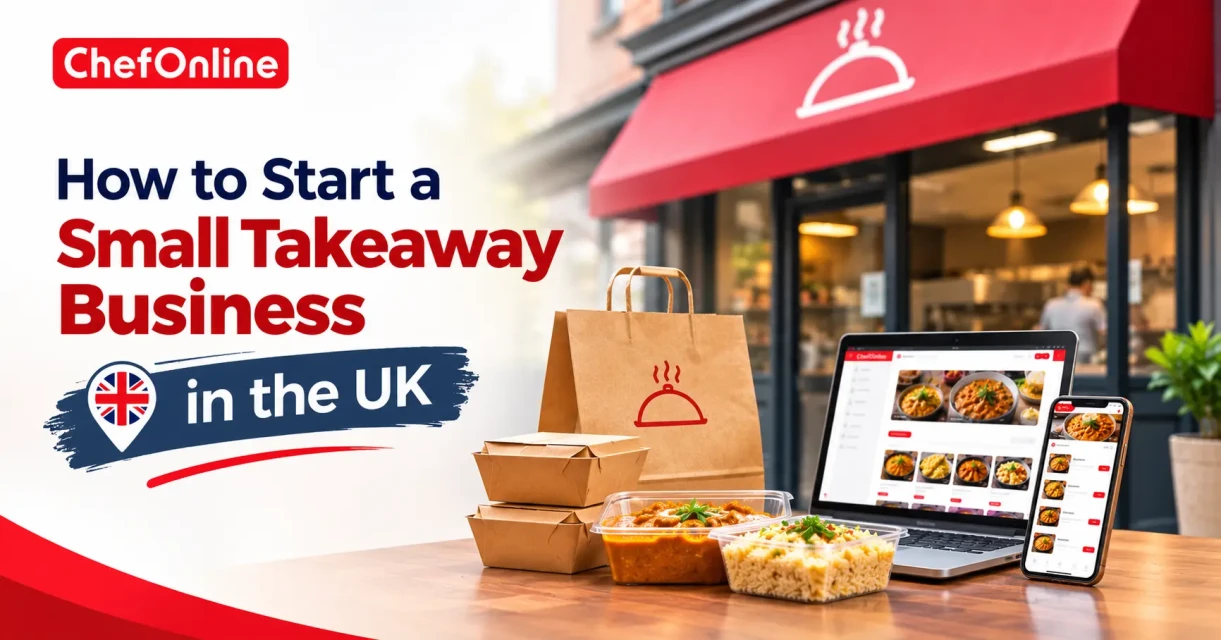
The UK loves takeaway food. The market is worth over £14 billion and growing. People order curry on a Friday. Pizza on a Saturday. Chinese on a Sunday. The demand is there. The question is how to grab a slice of it.
Starting a takeaway is not just about cooking good food. It is about planning, legal setup, the right equipment, smart technology and marketing that gets people through the door. A successful takeaway gets all of these right. This guide walks you through every stage. From writing your takeaway business plan to opening day and beyond.
Create a Takeaway Business Plan Before Launching
A business plan is not paperwork for the sake of it. It reduces risk. It forces you to think through costs, customers and competition before you spend a penny. Every takeaway that fails usually skipped this step.
Define Your Takeaway Concept
What are you selling? Indian takeaway is the UK favourite. Pizza is universal. Burgers are fast and profitable. Chinese food is built for sharing. Healthy meals are a growing niche. Dessert takeaway is a rising trend.
Pick your niche based on what you cook well and what your local area is missing. Then identify your target customers. Families. Students. Office workers. Late-night revellers. Each group wants something different from a takeaway.
Research Your Local Takeaway Market
Walk your local high street. Count the takeaways. Note their cuisines, their prices and their opening hours. Check their reviews on Google and Tripadvisor. Look at the gaps. If there are five pizza places and no Indian takeaway, that tells you something.
Research local demographics. A student area wants cheap, fast food. A family area wants value and variety. A business district wants lunch deals and quick collection. Match your concept to the people who actually live and work nearby.
Estimate Startup Costs
Takeaway startup costs catch people out. Here is what you need to budget for. Premises deposit and rent. Usually one to three months upfront. Kitchen equipment. Cookers, fridges, fryers, prep tables. This is your biggest cost. Licences and registrations. Most are free but some require fees. Ingredients and packaging for the first few weeks. Staff costs if you are not running it alone. Marketing budget for launch. And technology costs, including your EPOS and online ordering system.
Choose Your Business Model (Shop, Dark Kitchen or Home-Based)
Not every takeaway needs a shop on the high street. There are three main models. Each has different costs and different opportunities. The model you choose affects how to open a takeaway shop and what your ongoing costs look like.
Traditional Takeaway Shop
A physical location gives you walk-in collection. You get a shopfront. People see your brand. But setup costs are higher. You pay rent, business rates and utility bills. This model works best when you have a good location and enough foot traffic to justify the cost.
Delivery-Only Kitchen
Also called a dark kitchen or cloud kitchen. You rent a commercial kitchen space with no shopfront. You sell only through online ordering and delivery. Premises costs are much lower. The focus is on volume and efficiency. The risk is that you depend on delivery partnerships, which charge commission.
Home-Based Food Business
You can start a small food business from home, but the rules are strict. Your kitchen must meet the same food safety standards as a commercial kitchen. You must register with your local authority. Environmental health will inspect your premises. Some home setups do not pass. Check the rules before you invest in equipment. The GOV.UK food business registration page explains what you need to do.
Complete Legal Requirements for Starting a Takeaway in the UK
Before you open, you must be legal. The fines for skipping this are worse than the cost of doing it properly.
Register Your Food Business
You must register your food business with your local authority at least 28 days before you start trading. Registration is free. You do it online through the GOV.UK food business registration portal. Once registered, environmental health will inspect your premises. They check food storage, hygiene, allergen management and kitchen cleanliness.
Get Required Licences and Certificates
Takeaway licence requirements are not optional. Food hygiene training is essential. You and your staff need at least a Level 2 certificate. If you sell alcohol, you need a premises licence. If you play music, you need a PRS licence. Check planning permission with your local council. Some premises need change-of-use approval before they can operate as a takeaway.
Understand Food Safety Responsibilities
Food storage standards matter. Raw and cooked food must be stored separately. Temperature control is critical. Hot food must be held above 63 degrees. Cold food below 8 degrees. Allergen management is a legal requirement. You must know what is in every dish and be able to tell customers. The Food Standards Agency publishes detailed guidance on allergen management and food safety.
Find the Right Takeaway Location
Location can make or break a takeaway. Get it wrong and no amount of marketing will fix it. Get it right and the customers come to you.
Factors to Consider When Choosing Premises
Foot traffic. How many people walk past your door every day? Local competition. Are there three other takeaways on the same street? Parking and collection access. Can customers park easily to pick up their order? Delivery coverage area. Are you within reach of enough postcodes for delivery? Rent costs. Can you afford the rent and still make a profit?
Check Commercial Kitchen Requirements
Your premises must meet commercial kitchen standards. Ventilation systems to handle cooking fumes. Sufficient cooking equipment for your menu. Adequate storage space for dry goods, refrigerated items and frozen stock. Waste management systems for food waste, packaging and grease. Check these before you sign the lease, not after.
Buy Essential Takeaway Equipment and Supplies
The right equipment makes service faster, safer and more profitable. Here is what you need.
Commercial Kitchen Equipment Checklist
Cooking appliances. Commercial ovens, fryers, grills and hobs sized for your menu. Refrigeration. Commercial fridges and freezers for safe food storage. Preparation surfaces. Stainless steel prep tables that are easy to clean. Storage equipment. Shelving, ingredient bins and containers. Cleaning equipment. Sinks, sanitiser, cloths and a cleaning schedule that is actually followed.
Packaging and Consumables
Food containers that keep food hot and do not leak. Bags for delivery and collection. Cutlery, napkins and sauces. Eco-friendly packaging is increasingly expected by customers and some local councils. Budget for it from day one.
Set Up Technology for Your Takeaway Business
Technology is not optional. It is how you take orders, track sales, manage stock and reach customers. If you want to understand the full picture, our guide to the best EPOS system for restaurants in the UK covers what to look for.
Choose a Takeaway EPOS System
An EPOS system does more than ring up sales. It handles order management. It produces sales reporting so you know which dishes sell and which do not. It tracks inventory so you know when to reorder. It communicates with the kitchen so orders go straight to the chef. A good EPOS pays for itself in time saved and mistakes avoided. Explore ChefOnline EPOS solutions to see what an integrated system looks like.
Add an Online Ordering System
Your own website ordering lets customers order direct from you. No commission. No third party taking a cut. Mobile ordering is essential. Most UK takeaway orders come from phones. A customer database lets you see who orders, what they order and how often. Loyalty programmes bring them back. Direct ordering means the customer relationship is yours.
Market Your New Takeaway Business
Good food is not enough. People need to know you exist. Here is how to get the word out.
Build an Online Presence
Your website is your digital shopfront. It should show your menu, your prices and your opening hours. Your Google Business Profile is critical. It is what shows up when someone searches “takeaway near me.” Keep it updated with photos, hours and offers. Social media pages on Facebook and Instagram let you post daily specials and build a following. Customer reviews on Google and Tripadvisor build trust. Ask every happy customer to leave one.
Use Local Marketing Strategies
Local SEO helps you show up in local searches. Leaflet campaigns work in the first few weeks. Drop menus through doors within a one-mile radius. Opening promotions like 20% off your first order get people to try you. Community partnerships with local businesses and offices can bring in regular orders.
Increase Repeat Orders
A new customer is expensive. A repeat customer is profitable. Loyalty rewards keep people coming back. Email marketing lets you send offers to people who have already ordered. Discounts on slow nights fill the gaps. Personalised offers based on what someone usually orders make them feel valued.
Common Mistakes New Takeaway Owners Should Avoid
Underestimating Startup Costs
Equipment breaks. Rent deposits are higher than expected. The first few weeks are slow. Keep an emergency fund of at least three months of operating costs. Most takeaways that fail in the first year run out of cash before they build a customer base.
Choosing the Wrong Location
A cheap rent on a dead street is not a bargain. No foot traffic means no walk-in collection. Poor delivery coverage means fewer online orders. High operating costs on a quiet road will eat your margin before you find customers. Choose location over price every time.
Relying Only on Delivery Marketplaces
Marketplaces like Uber Eats and Deliveroo bring visibility. But they charge 20% to 30% commission on every order. They own the customer data. They control the relationship. If you rely only on marketplaces, you are renting your customers. Build your own direct ordering channel from day one. That is how you keep your margin and own your customer relationships long term. The ChefOnline partner programme helps restaurants set up direct ordering without commission on each sale.
Small Takeaway Business Launch Checklist
Here is your complete launch checklist. Work through it in order.
1. Write your takeaway business plan
2. Choose your food niche and target customers
3. Research your local market and competitors
4. Estimate your full startup costs
5. Choose your business model (shop, dark kitchen or home-based)
6. Register your food business with the local authority
7. Complete food hygiene training (Level 2 minimum)
8. Register your limited company or sole trader business
9. Check planning permission for your premises
10. Find and secure the right location
11. Fit out your commercial kitchen (ventilation, equipment, storage)
12. Buy kitchen equipment, packaging and consumables
13. Set up your EPOS system
14. Set up your online ordering system
15. Build your website and Google Business Profile
16. Create social media pages
17. Plan your opening promotion
18. Print menus and leaflets
19. Test your kitchen and ordering system before launch day
20. Open and start taking orders
Conclusion
Starting a small takeaway business in the UK is hard work but the rewards are real. The market is growing. The demand is there. The key is getting the basics right. A solid business plan. The right location. Full legal compliance. The right equipment. Smart technology. And marketing that gets you noticed.
The biggest mistake new owners make is relying on someone else for their orders. Build your own channel. Own your customers. Keep your margin. If you want help setting up your direct ordering, EPOS and digital marketing in one place, explore what ChefOnline can do for your new takeaway.